
๐Ÿ“ž Call for a Free Quote: 689-358-3644

Water Extraction & Structural Drying in Orlando, FL

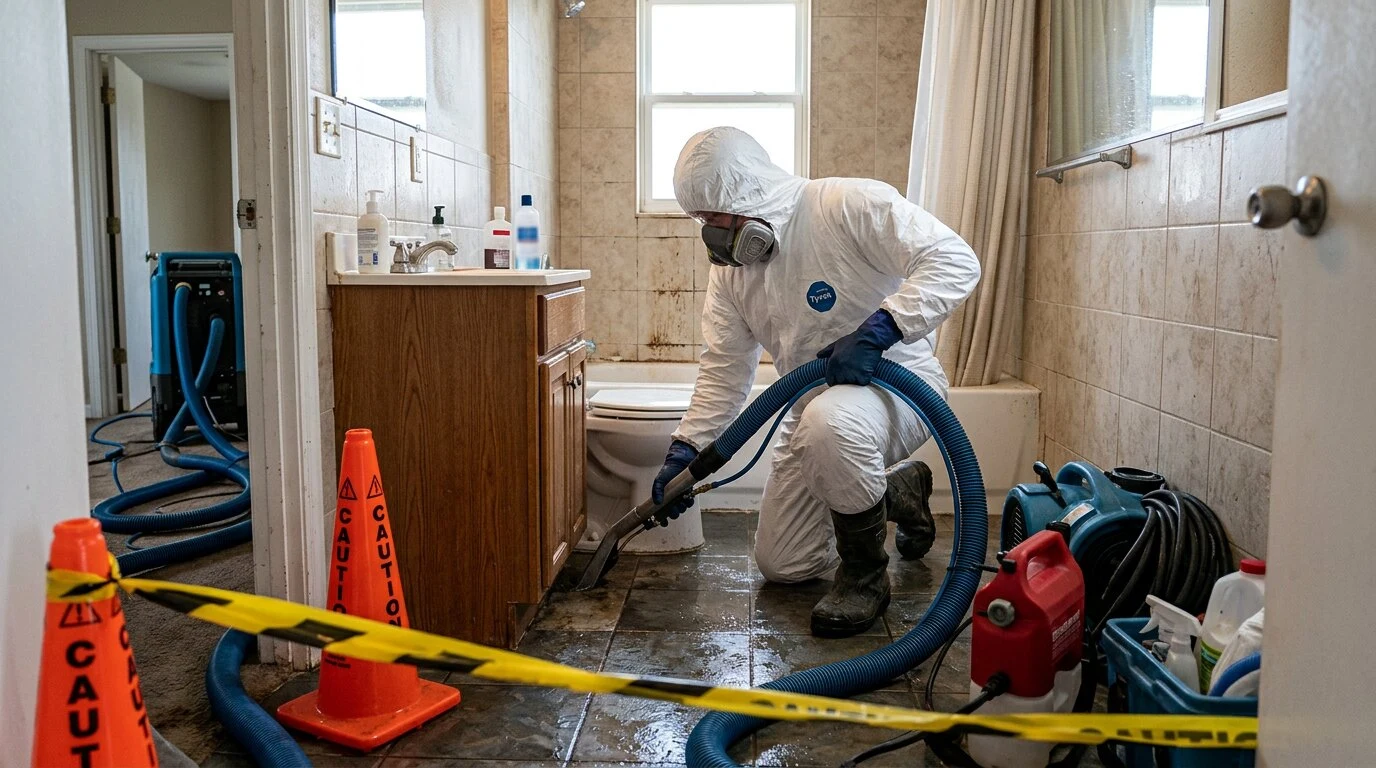
Technicians using truck-mounted extraction pumps to remove standing water from a flooded home

When water is actively standing in a home or business, extraction speed determines how much of the structure ends up damaged. We run truck-mounted extraction units and submersible pumps for anything from a flooded garage after a summer downpour to a fully saturated first floor after a lake overflow, and we're set up for 24/7 dispatch because Orlando's flooding often arrives โ€” and lingers โ€” well after the rain has already stopped.

Once standing water is out, we move into moisture mapping to find water that's migrated into walls, cabinetry, and subfloor, then position industrial air movers and commercial dehumidifiers to bring the structure to a verified dry standard, not just a surface that looks dry. Every reading is logged against IICRC S500 targets for the specific materials involved.

Given how quickly Central Florida's humidity can turn a wet structure into a mold problem, we monitor drying daily until every affected material actually reaches target moisture content.

๐Ÿ“ž Call 689-358-3644

Request This Service

* Indicates required field

Our Extraction & Drying Process, Step by Step

We start with truck-mounted extraction to pull standing water fast, then move to moisture mapping with penetrating meters to find where water has migrated into walls, cabinet toe-kicks, and subfloor โ€” areas that look dry but aren't. Air movers and dehumidifiers go in based on that map, not a generic room-by-room setup, and we return daily to re-check readings until every affected material hits its IICRC S500 dry-standard target, not just until the carpet feels dry underfoot.

Slab-on-Grade Homes Change the Drying Plan

Because most Central Florida homes are built slab-on-grade, water that reaches the concrete slab itself can wick up into drywall and baseboards for weeks after the visible water is gone if it isn't addressed. We check moisture content in the slab and the bottom few inches of wall material specifically, and in multi-story properties we also check the ceiling below any upper-floor loss, since water travels down through electrical penetrations and plumbing chases before it ever shows as a stain.

What Actually Determines Drying Time

Two jobs with the same amount of standing water can take very different amounts of time to dry, depending on how porous the affected materials are (drywall and particleboard cabinetry hold water far longer than solid wood or tile), how long water sat before we were called, and Central Florida's ambient humidity that week. We give a realistic drying-time range on the first visit and update it as daily readings come in, rather than quoting a flat number that doesn't hold up.

The Equipment Behind a Verified Dry Standard

Truck-mounted extraction units pull hundreds of gallons an hour directly from standing water, while portable submersible pumps handle spots a truck-mount hose can't reach, like a flooded crawl space access or a low garage corner. Once the standing water is gone, we place low-grain-refrigerant dehumidifiers sized to the affected square footage, because a unit that's too small just runs constantly without ever catching up to the humidity air movers are pushing into the room. For measurement, we use non-penetrating scan meters to sweep a whole wall or floor quickly, then follow up with penetrating pin meters wherever the scan shows elevated readings, giving us both a fast overview and a precise number where it matters.

Water Damage Signs Homeowners Often Miss

Obvious standing water is the easy call โ€” the damage that gets missed is what's already spread beyond it. Cupped or crowned hardwood flooring, a faint musty smell that wasn't there last week, baseboards that have started to separate from the wall or feel soft when pressed, and paint or drywall texture that's begun to bubble are all signs water has traveled further than it looks. Even a water bill that's noticeably higher than usual can be the first real clue of a slow leak feeding a wall cavity nobody's inspected yet. We check all of these areas on every extraction call, not only the room where the damage is visually obvious, since Florida's humidity gives migrated moisture very little time before it becomes a mold problem.

What Actually Drives the Cost of an Extraction and Drying Job

Total affected square footage is the biggest factor, but the water category matters almost as much: Category 1 clean-water extraction and drying costs less than Category 2 or 3 work, which adds containment, PPE, and disposal of porous materials that can't be dried and reused. The number of drying days also plays in, since materials like particleboard cabinetry and engineered flooring hold moisture far longer than solid wood or tile and simply need equipment running longer to reach dry standard. We provide itemized invoicing tied to our daily moisture logs, so both you and your insurance carrier can see exactly what equipment ran, for how long, and why โ€” rather than a flat number with no documentation behind it.

Why DIY Drying Usually Falls Short

Renting a couple of box fans and running a household dehumidifier over a weekend addresses the surface, not the problem. A consumer dehumidifier pulls a fraction of the moisture per day that a commercial low-grain-refrigerant unit does, and without a moisture meter there's no way to confirm a material has actually reached dry standard versus simply feeling cool and dry to the touch. We see the aftermath of this often: a homeowner dries a room for a few days, the carpet feels fine, but the padding underneath and the bottom few inches of wall are still elevated โ€” and a few weeks later what would have been a straightforward drying job has become a more expensive mold remediation call.

Why the First Hour After a Call Matters

We run 24/7 dispatch because the gap between when water starts standing and when extraction begins is the single biggest variable in how much of a structure ends up damaged. Central Florida's humidity typically sits high enough that wet organic material can begin supporting mold growth within 24 to 48 hours, so a call placed at 2 a.m. gets the same response priority as one placed at 2 p.m. Getting a truck-mounted unit on site fast doesn't just limit visible damage โ€” it often determines whether drywall and subfloor can be dried in place at all, or whether they've already absorbed too much water to save.

Water Extraction & Structural Drying FAQs

How do you know when a structure is actually dry, not just dry to the touch?

We use penetrating and non-penetrating moisture meters to measure actual moisture content against IICRC S500 dry-standard targets specific to each material โ€” drywall, subfloor, framing โ€” logging readings from the first visit through final confirmation. A surface can feel dry to the touch while the framing behind it is still well above target.

Do you need to cut out drywall to dry a wall cavity?

Not always. If we can get airflow into the cavity and readings show it's drying at a reasonable rate, we dry it in place. Drywall gets removed when it's been saturated with contaminated water, when it's no longer structurally sound, or when trapped moisture isn't coming down fast enough with equipment alone.

How many days does drying equipment typically stay in place?

It varies with material porosity and how long water sat before extraction โ€” often 3 to 5 days for a contained clean-water loss, longer for materials like particleboard cabinetry or a job where water sat for an extended time before being discovered. We reassess with daily readings rather than committing to a fixed number upfront.

Areas We Serve

Proudly providing water damage restoration across the region:

Get Water Extraction & Structural Drying in Orlando Today

Fast response, upfront pricing, and friendly local pros. Call now for a free quote.

๐Ÿ“ž Call 689-358-3644